AI · developer infrastructureOpen source2026
Every free model. One endpoint.
FreeLLMAPI turns the scattered free tiers of the LLM ecosystem into one self-hosted, OpenAI-compatible API—then routes every request to the best model and key that still has room.
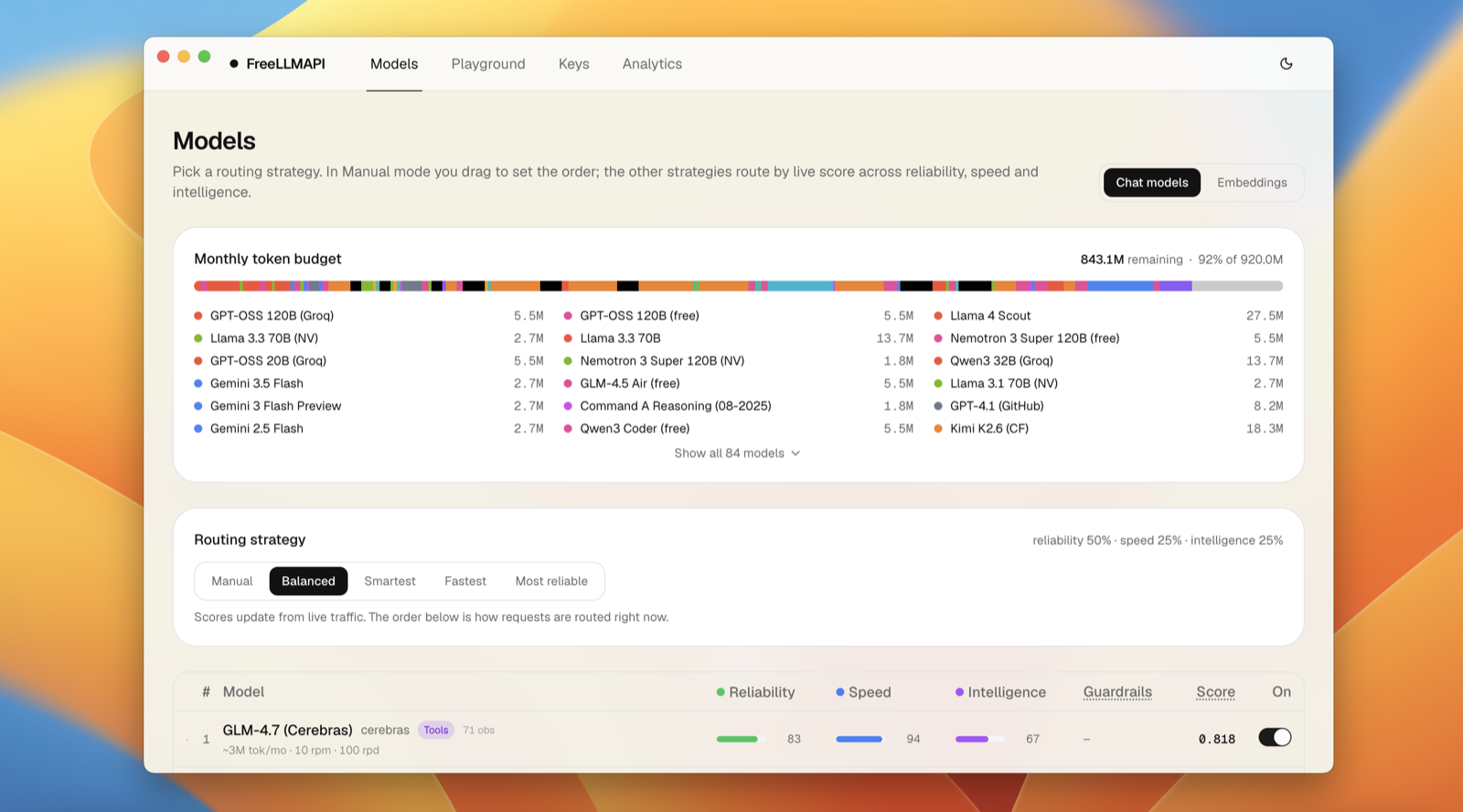
In short
What is FreeLLMAPI?
FreeLLMAPI is a self-hosted router that puts 343+ free large-language-model endpoints from 27 providers behind a single OpenAI-compatible /v1 address — roughly 4 billion free tokens a month reachable through one integration instead of 27.
A routing layer scores every model on capability, speed, reliability and remaining quota before a request goes out, tracking RPM, RPD, TPM and TPD per model and per key. When a provider rate-limits, times out or fails, FreeLLMAPI cools that key down and moves the same request to the next viable route, and the calling application never learns a second integration. Provider keys stay in the user's own SQLite database, encrypted with AES-256-GCM, because FreeLLMAPI runs on the user's own machine rather than as a hosted middleman. One compatibility layer covers chat, responses, embeddings, images, audio, tools, structured output and MCP, so a single integration reaches all 27 providers.
Updated
01 · The problem
Free inference was everywhere. Usability wasn’t.
The major AI labs all offer free capacity. Separately, each allowance is small and comes with its own SDK, model names, quota rules and failure modes. Together, they are a serious amount of compute—if something can keep track of all the moving pieces.
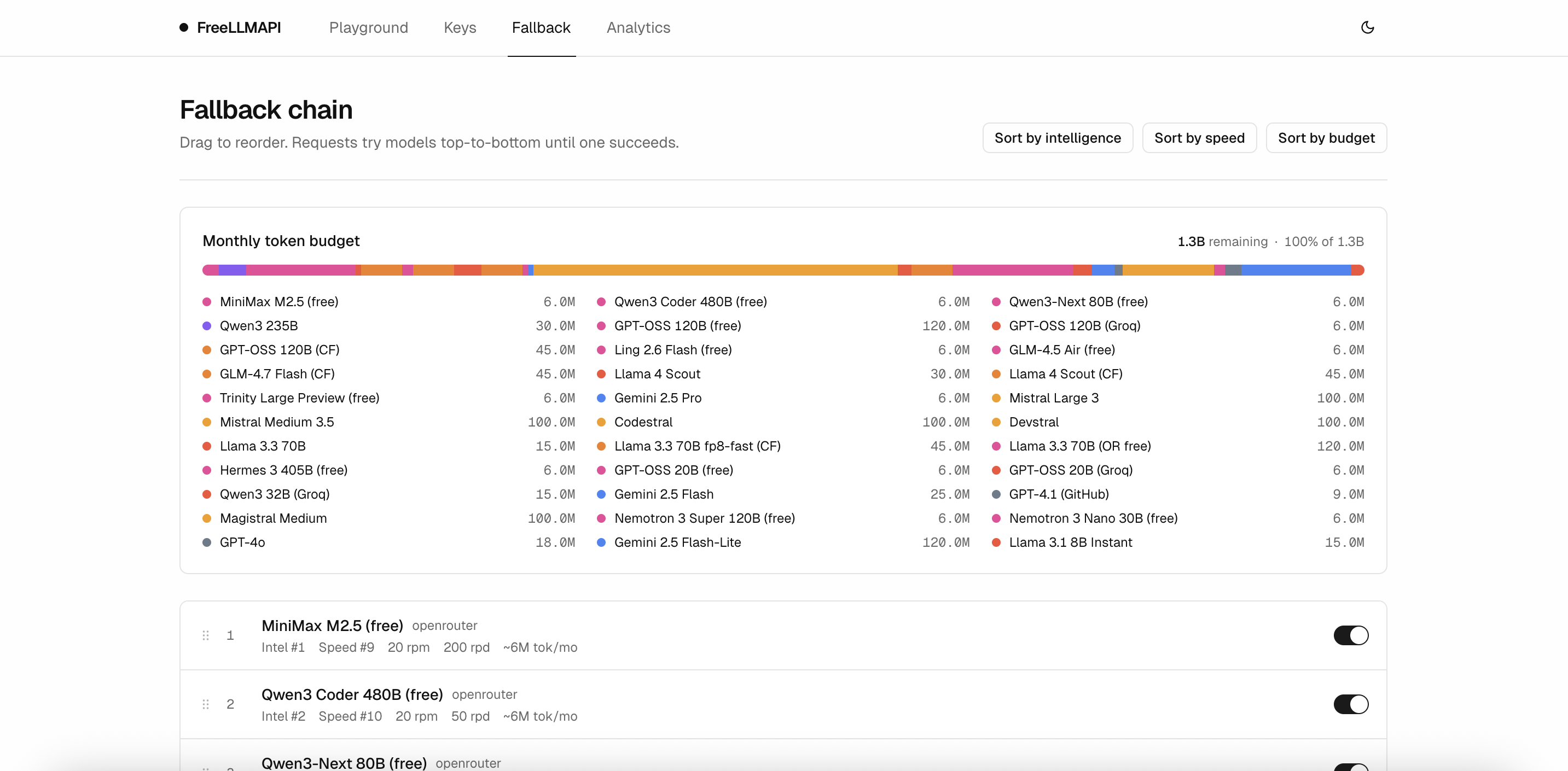
FreeLLMAPI makes that fragmentation disappear behind the interface developers already know. An existing OpenAI client only changes two values: its base URL and API key.
const client = new OpenAI({
  baseURL: 'http://localhost:3001/v1',
  apiKey: 'freellmapi-…'
})

await client.chat.completions.create({
  model: 'auto',
  messages
})
02 · The product
One request in. The best available model out.
A routing layer scores models against capability, speed, reliability and remaining quota. When a provider rate-limits, times out or fails, the key cools down and the same request moves to the next viable route—without the calling app learning a new integration.
- Smart routingPriority, balanced, smartest, fastest, reliable or a custom weighting.
- Quota-aware falloverTracks RPM, RPD, TPM and TPD per model and key before a request is sent.
- One compatibility layerChat, responses, embeddings, images, audio, tools, structured output and MCP.
- Local-first by designProvider keys stay in the user’s own SQLite database, encrypted with AES-256-GCM.
React·TypeScript·Express·SQLite·Docker·Electron
03 · The control surface
Infrastructure you can actually see.
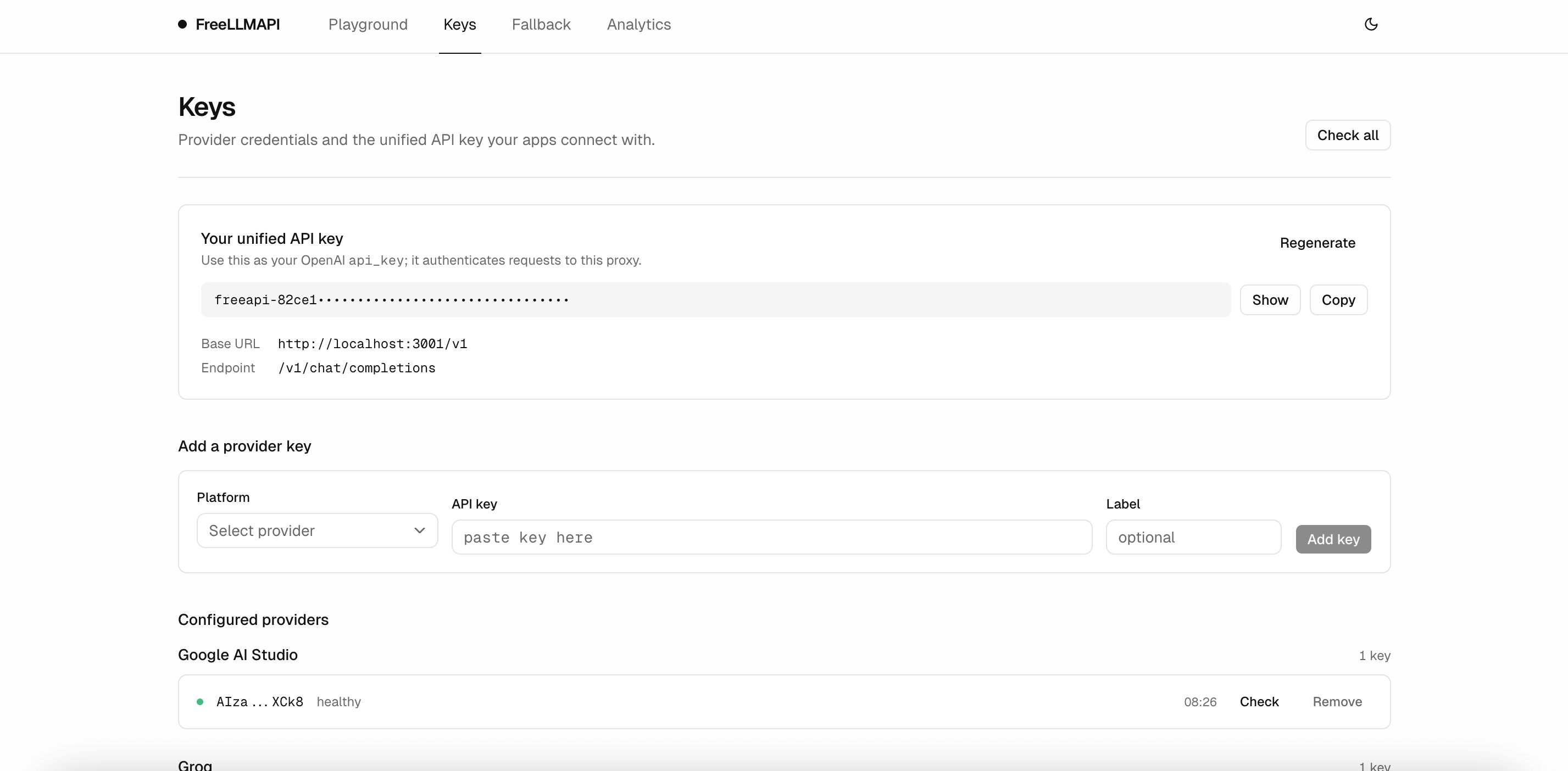
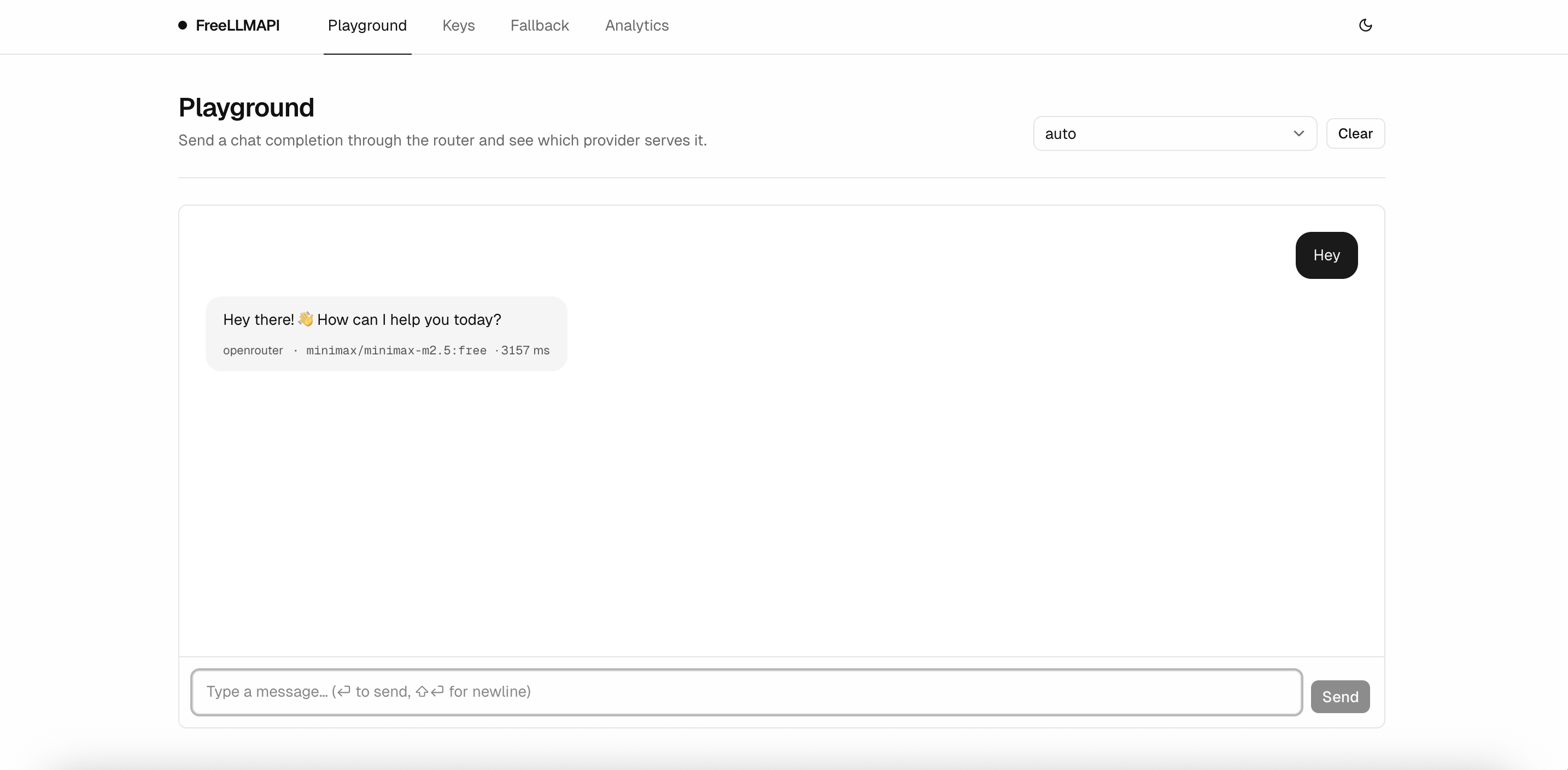
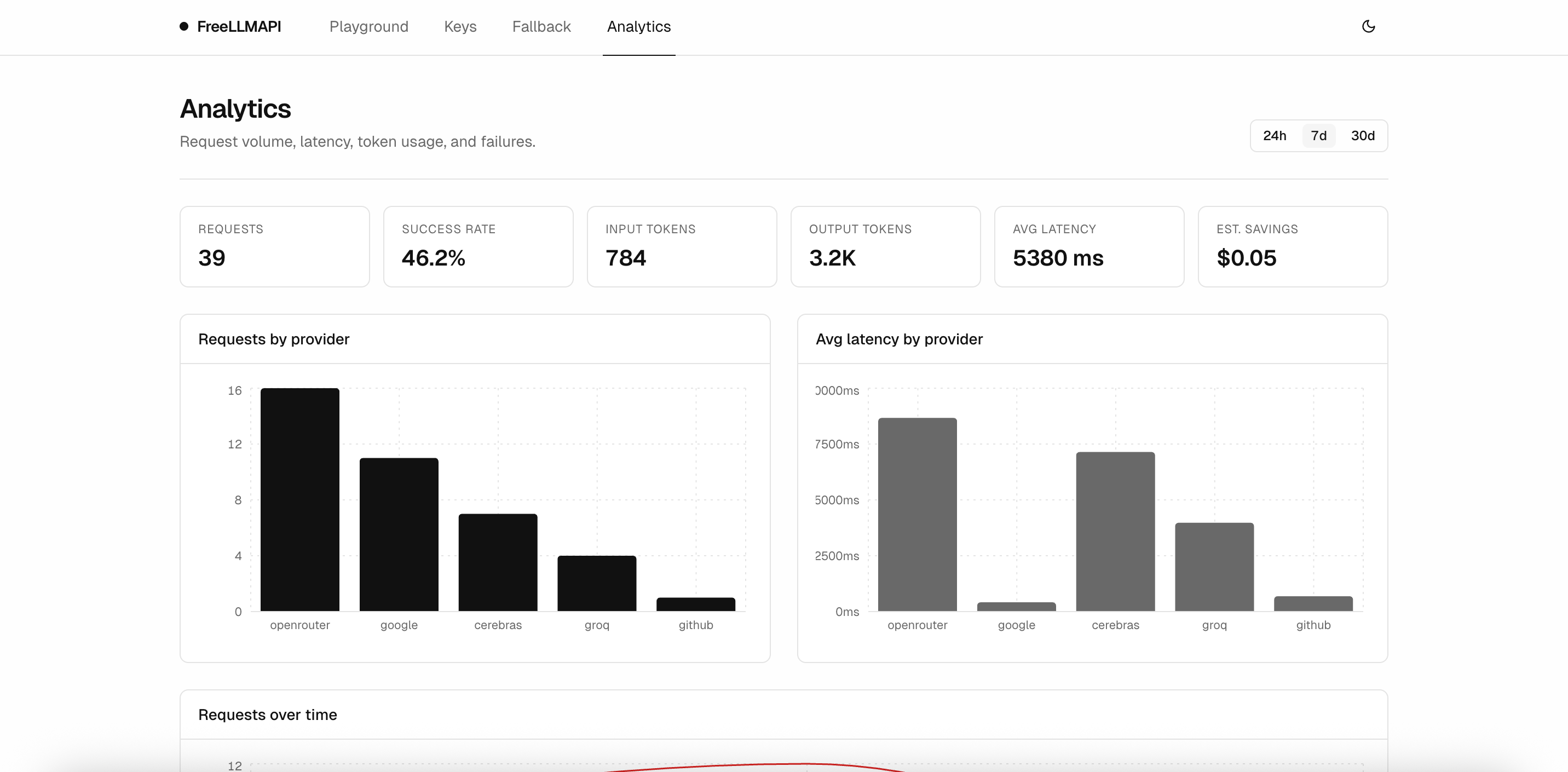
The dashboard makes the router legible. Add and health-check provider keys, inspect the budget across the whole pool, drag the fallback order, test a prompt, then trace request volume and latency back to the provider that served it.
It runs as a Docker service or a native desktop app on macOS and Windows. The UI ships in six languages, while a signed live catalog keeps model launches, quota changes and provider quirks current without a reinstall.
The internet found it.
A few of the posts that sent developers looking for one endpoint across the free-model ecosystem, gathered into one wall.
Catalog figures shown are a point-in-time snapshot from freellmapi.co in July 2026; the live catalog continues to change.